
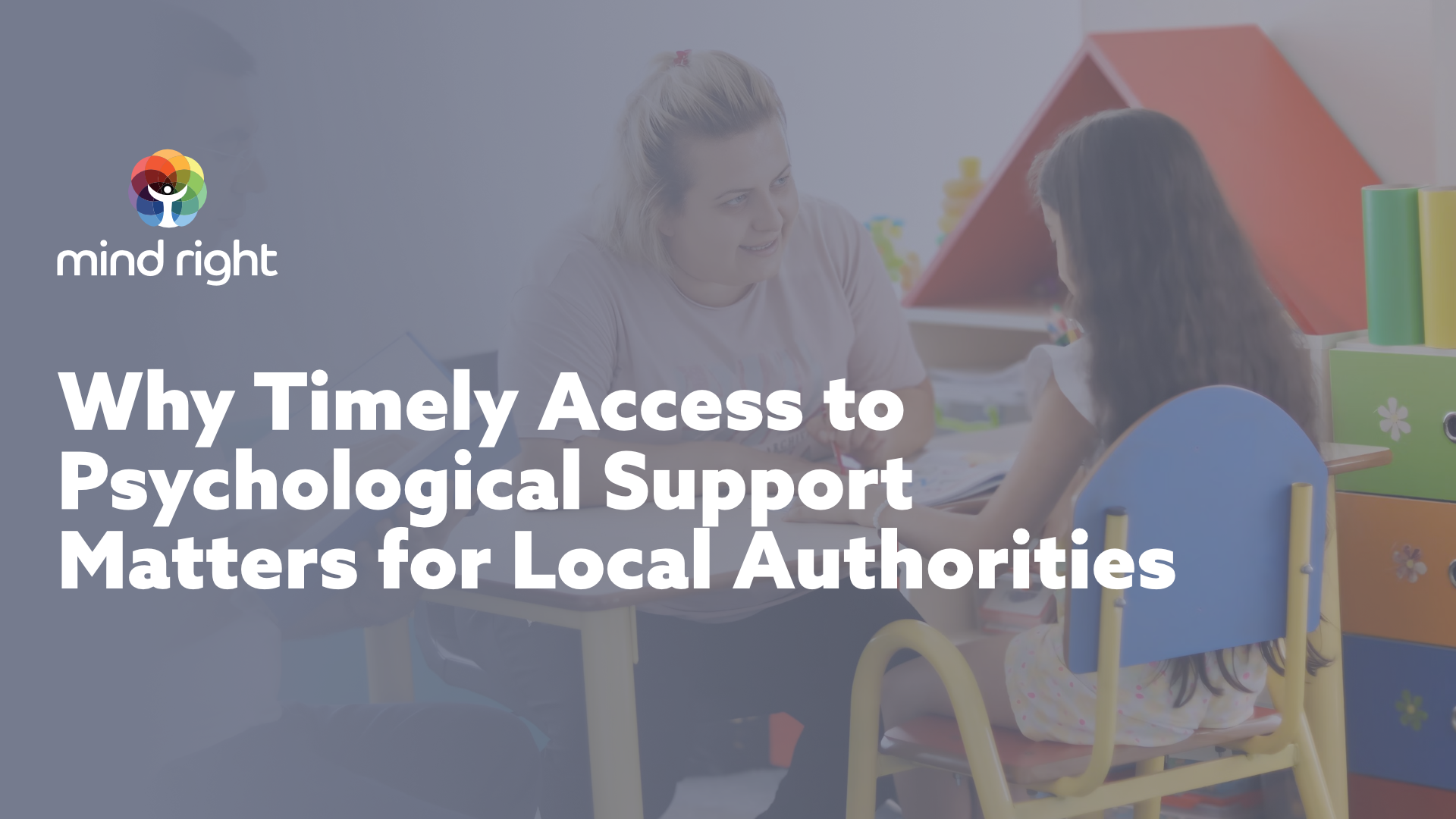
Local Authorities and Children’s Services teams are operating in increasingly complex conditions. Rising demand, limited capacity and growing case complexity mean that securing appropriate psychological input at the right time is often one of the most challenging aspects of case progression.
When psychological needs are not addressed early or effectively, the consequences are rarely isolated. Placement stability can be compromised, family relationships may deteriorate further, and decision-making becomes more difficult when assessments or treatment are delayed.
Across the sector, there is growing recognition that access, suitability and continuity of psychological support are not just clinical considerations, but fundamental to safeguarding, planning and long-term outcomes.
The Cost of Delay in Psychological Input
Delays in assessment or treatment often occur not because the need is unclear, but because access routes are fragmented or difficult to navigate. In practice, this can mean waiting weeks for availability, sourcing multiple clinicians before the right fit is found, or revisiting decisions when engagement breaks down.
For children, young people and families, these delays can intensify distress and behavioural presentation. For professionals, they create pressure on timelines, increase risk and make already complex cases harder to manage.
Timely access matters, but so does clinical appropriateness. The two are inseparable.
Why Clinical Fit Goes Beyond Availability
Clinical fit is often discussed in terms of therapeutic approach or experience, but in Local Authority settings it extends further. Language, cultural context and lived experience can be central to whether psychological support is accessible and effective.
Where individuals or families are working in a second language, or where cultural norms shape communication, trust and engagement, mismatched provision can unintentionally create barriers. In these situations, even well-intentioned support may struggle to gain traction.
Early consideration of language needs and cultural understanding can support clearer communication, better engagement and more accurate assessment. This is particularly important in family work and in cases involving safeguarding, trauma or intergenerational dynamics.
Learning from Practice Across Local Authorities
From working alongside Local Authorities across the UK, several themes consistently emerge as markers of effective psychological provision:
- Clear access routes that do not add administrative burden
- Early clarity on availability, suitability and timescales
- Consideration of language and cultural context alongside clinical need
- Consistent clinical governance and communication
- Transparency around costs and scope of work
These principles reflect the realities of practice, where one-size-fits-all approaches rarely meet the needs of diverse communities.
Simplicity Supports Better Outcomes
One of the most common challenges raised by Local Authority teams is the complexity of referral processes at a time when capacity is already stretched. Lengthy forms, unclear criteria and slow feedback loops can become barriers rather than safeguards.
Keeping processes simple while allowing for important contextual detail, including language requirements and cultural considerations, helps professionals make informed decisions earlier and reduces the risk of rework later in the case.
Looking Ahead
As demand continues to rise, the conversation around psychological provision within Local Authorities is evolving. There is increasing emphasis on early intervention, clinical appropriateness and culturally informed practice that reflects the communities being supported.
Improving access to the right psychological support at the right time requires more than speed. It requires thoughtful matching, clear communication and systems that recognise the full context of an individual or family’s experience.
At Mind Right, our work is shaped by these realities. Through our national clinical network and structured approach to psychological provision, we aim to support Local Authorities in navigating complexity with clarity and care.
You can find more about our services and clinical approach here:
https://www.mindright.co.uk/our-services/
Or learn more about our national clinician network here:
https://www.mindright.co.uk/our-network/